Expert care that works with your tree's natural form — pruning that helps your trees thrive for the long term and keeps them looking their best.
Pruning is an essential practice for maintaining the beauty and structural integrity of your trees — and, done well, it helps them thrive for decades. At Treemate we specialise in professional, efficient pruning across Adelaide and the Hills — combining modern techniques with a deep understanding of tree biology to deliver results that enhance the longevity and appeal of your trees.
Pruning is more than just trimming branches — done properly, it's often what decides whether a tree can be kept at all.
Good pruning is often the difference between keeping a tree and losing it — it makes the difference as to how many trees can be kept.
We remove the smallest possible amount of living tissue, with cuts placed so the tree can seal each wound naturally.
Well-placed pruning — especially formative pruning in younger trees — improves structure and reduces branch failures.
Pruning that works with the tree's natural form keeps its character. Done well, you shouldn't be able to tell it's been pruned.
We believe in working with a tree's natural form to achieve the best result. Our approach focuses on removing the smallest possible amount of living tissue while protecting the tree's health and appearance.
Before we start any pruning project, we work closely with you to understand your goals. Whether you're concerned with risk mitigation, enhancing visual appeal, or a specific issue like branch clearance, we tailor the job to your needs.
These aren't just our names for things — every job we do is specified using the pruning classes in AS 4373-2007 Pruning of amenity trees and carried out in line with Arboriculture Australia's MIS308 Tree Pruning, the industry's current best-practice standard. Cuts are placed just outside the branch collar, so the tree can seal each wound naturally.
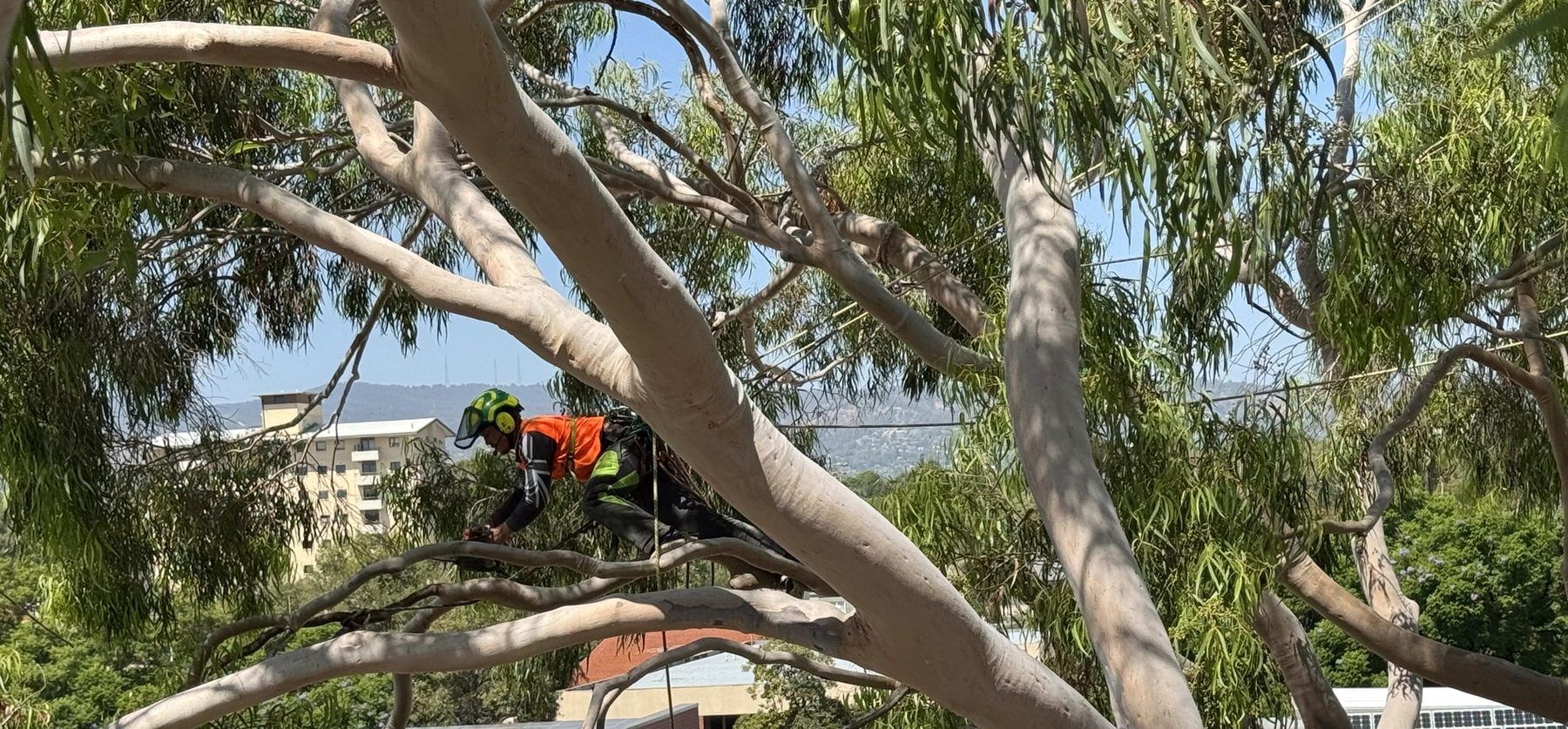
Every job starts with a proper look at the tree — its age, health, structure and where it's growing. We agree on a plan with you before anything is cut, then do the work safely and leave the site tidy. If council rules affect your tree, we sort that out as part of the quote.
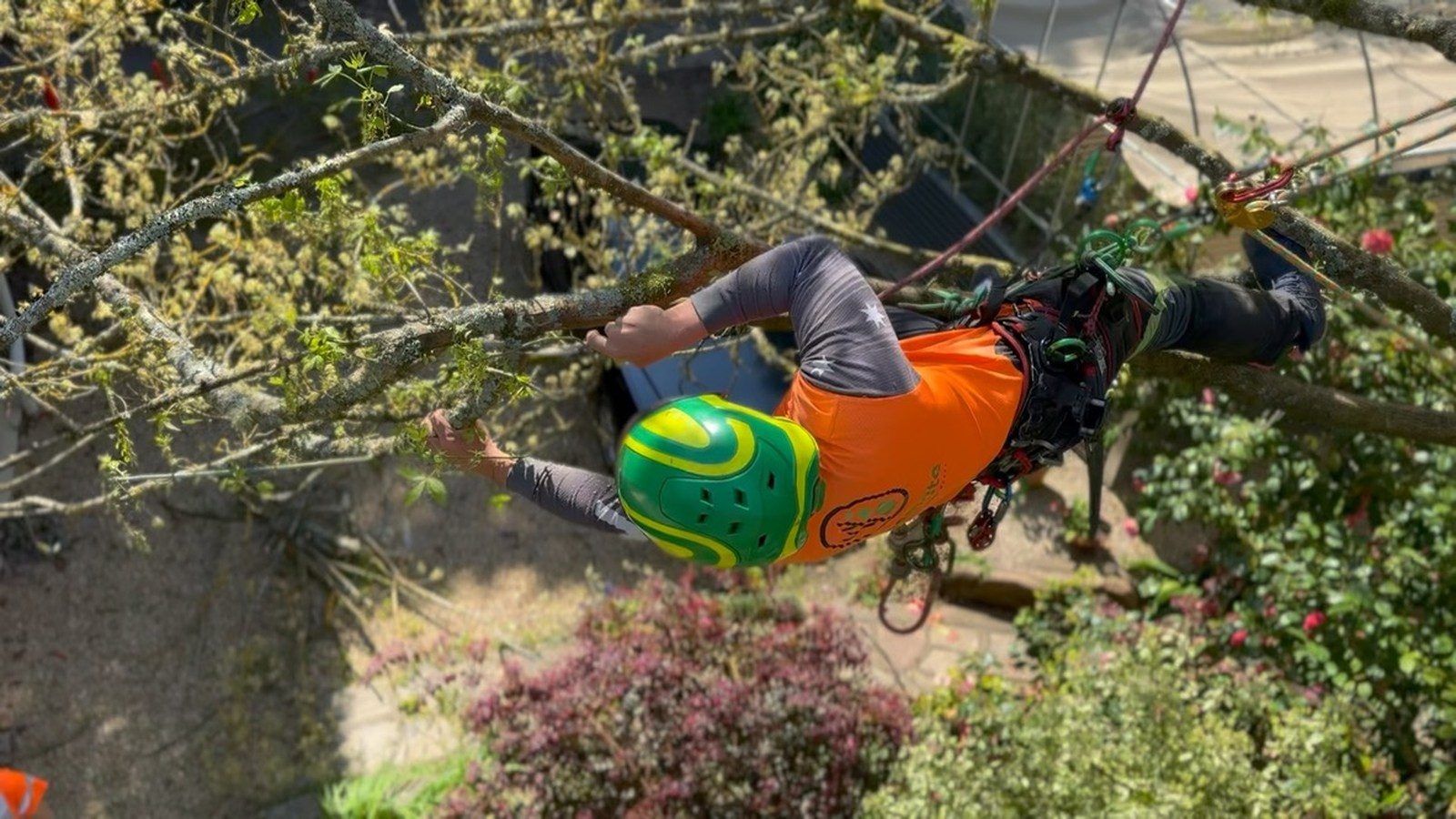
To most people pruning and lopping look like the same thing. They're opposites. Pruning removes a branch at the right point — back to the trunk, or to another branch big enough to take over — so the tree can seal the wound and carry on growing in its natural form. Lopping (or topping) just cuts branches off at a convenient height, wherever that happens to be, leaving stubs. It's classed as unacceptable practice under AS 4373, the Australian pruning standard.
Those stubs are the problem. The wounds don't seal, the exposed wood decays, and the shoots that regrow are anchored only in the outer wood — so as they get bigger and heavier, they're prone to snapping out. Within a few years the "quick cut" has produced a worse-looking tree that's more hazardous than the one you started with.
If a tree has outgrown its spot, the better answer is usually reduction pruning — shortening branches back to suitable smaller laterals, so the canopy is reduced in size while the tree keeps its shape. It's not suitable for every tree: some species won't tolerate it, and it depends on the tree in front of us — exactly what we assess at the quote. So if someone offers to "lop" your tree, ‘stop before you lop’ — get a second opinion first. It usually costs less in the long run.
And if reduction isn't viable for your tree — if it's dead, structurally unsound, or simply in the wrong place — then tree removal is the honest answer, and we'll tell you that at the quote rather than sell you pruning that won't hold.
Many established trees in the Adelaide Hills and across Adelaide are regulated or significant trees under South Australia's planning rules. The good news: most can still be pruned. The rules allow sensible maintenance without council approval, but the exemptions have limits that are often misread — so rather than quote figures here, we assess exactly what applies to your tree as part of the quote, and tell you where you stand before any work starts.
We've spent 26 years in the industry caring for trees — from minor maintenance through to extensive crown modifications on significant trees. Every job is tailored to your goals and the unique character of your trees, safety comes first on every site, and the work is done to industry best practice, every time. You can see the difference in our before and after gallery.
If we prune your tree and it suffers storm damage within 12 months, we'll remove and dispose of the damaged portion free of charge.
Request a booking online — it takes under a minute and goes straight into our job system.