
When a tree really does have to go — removed safely, cleanly and with respect for everything around it. And honest advice first, because removal isn't always the answer.
Tree preservation is one of our core values, so removal is never our first suggestion. But some trees genuinely can't be kept — and when that's the case, you want it done by people with the equipment and experience to take down a big tree safely, whatever is underneath it.
Our arborists assess the tree in front of us, not a checklist. The situations where removal usually earns its place:
Severe decay or dieback can leave a tree structurally unsound, with a real risk of failure.
High winds can split unions, tear out limbs or destabilise a whole tree overnight.
Excessive lean or a compromised root system can threaten people and property nearby.
Sometimes a tree is in unavoidable conflict with buildings, powerlines or planned works.
Plenty of trees are removed every year that could have been kept. Before we recommend removal, we look at whether reduction pruning could resolve the problem, whether a cable or brace could secure a weak union, or whether the underlying problem is one our tree health treatments can address. If one of those will genuinely do the job, we'll tell you — it usually costs less, and you keep the tree.
And if removal really is the answer, you'll know it's not because it was the easy thing to sell.
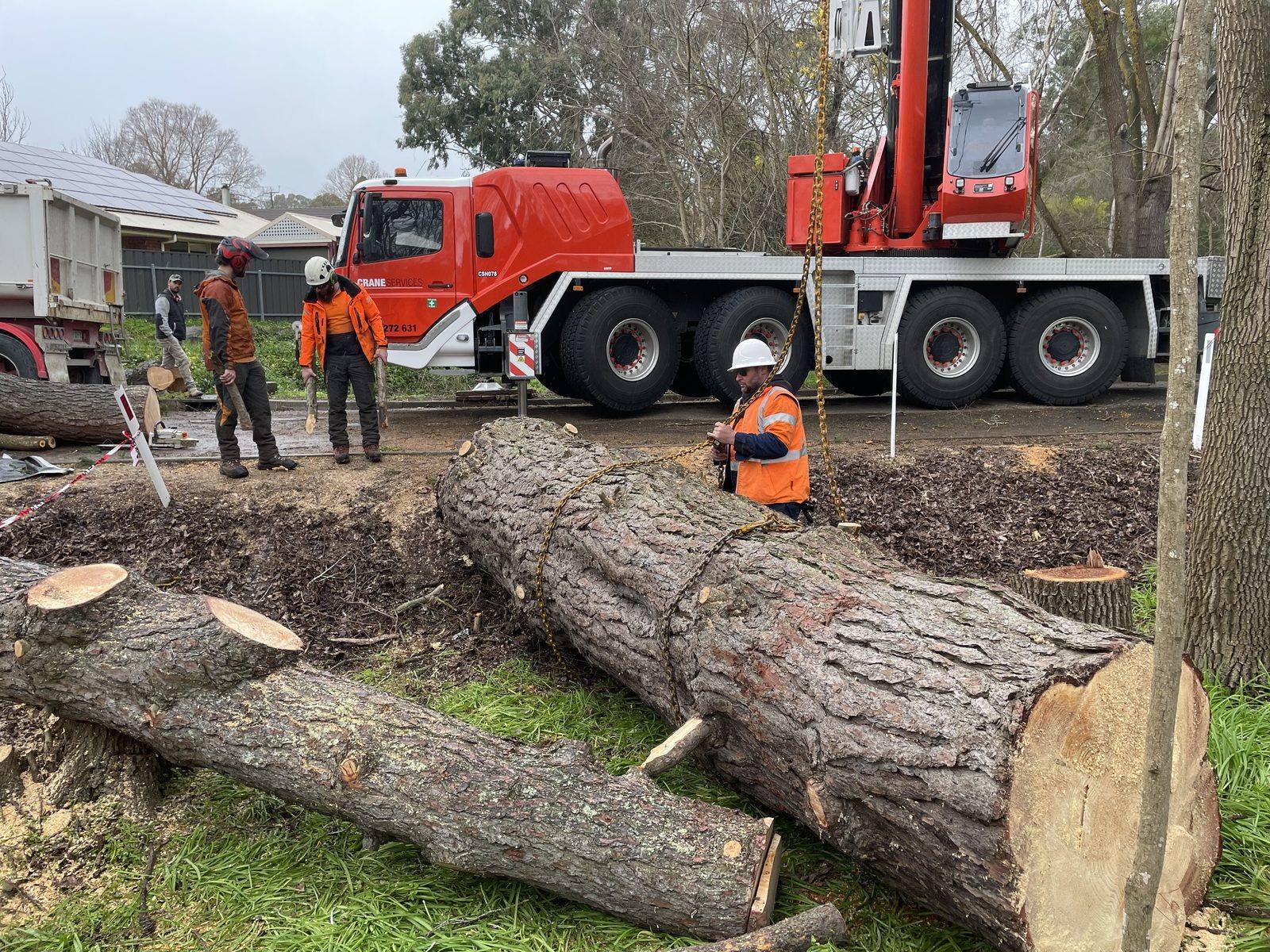
Every removal starts with a proper assessment of the tree, its surroundings and any council rules that apply. We plan the job before anyone starts a saw — most trees near houses come down piece by piece, with each section rigged and lowered under control, or lifted out by crane where access calls for it.
Once the tree is down we chip the branches, and the wood is dealt with responsibly — mulched, milled or recycled wherever possible, or cut to length as firewood if you'd like to keep it. We can grind the stump at the same visit, and the site is left tidy.
In South Australia, bigger trees are protected by law. Across metropolitan Adelaide and the Hills townships, a trunk circumference of 1.0 m or more (measured 1 m above the ground) generally makes a tree regulated, and 2.0 m or more makes it significant. Removing a protected tree needs development approval first, and getting it wrong can bring fines of up to $120,000 — though there are important exemptions, including most trees close to a house or pool, dead trees, and declared exempt species. The exemptions come with fine print — each has its own conditions and excluded species — so they need to be checked thoroughly against your specific tree before any work starts.
You don't need to untangle any of this yourself. We measure the tree, check what applies and tell you where you stand before we quote — and if urgent work is needed to protect people or property, the law allows it to proceed with council notified afterwards.
We've spent 26 years in the industry, and a complex removal puts all of that experience to work — big gums over houses, tight access, powerlines, trees that can't simply be felled. We bring the right gear for the job, from climbers and rigging through to EWPs and cranes, safety leads every decision on site, and we leave your place the way we found it — minus the tree.
Request a booking online — it takes under a minute and goes straight into our job system.